






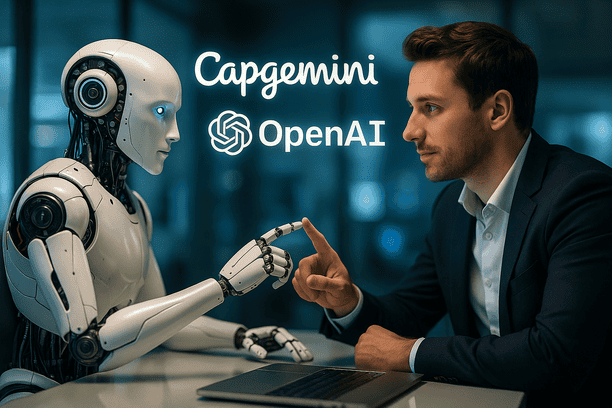

Introduction to the OpenAI Frontier Alliance
OpenAI’s Frontier Alliance is a strategic initiative designed to harness artificial intelligence (AI) to drive innovation across enterprise sectors. By convening leading technology companies and domain experts, the Alliance accelerates the development and deployment of cutting-edge solutions that use natural language processing, machine learning, and computer vision to solve complex industrial challenges. The result is a portfolio of capabilities that optimize operations, enhance decision-making, and create measurable value in competitive markets.
Equally central to the Alliance is a commitment to responsible AI. Its approach emphasizes ethics, transparency, and accountability—prioritizing human oversight and ongoing evaluation to ensure systems remain safe and aligned with human interests. This governance mindset supports enterprises as they advance from pilots to production-scale deployments in regulated and high-stakes environments.
OpenAI collaborates with partners across industries, providing access to state-of-the-art models and expertise to help organizations explore new applications and tailor solutions to sector-specific needs. These collaborations are not only about performance gains; they also introduce frameworks for safety, risk management, and lifecycle stewardship. In practice, this means enterprises can move faster—without sacrificing trustworthiness—by combining top-tier AI capabilities with robust operational controls.
Capgemini’s Strategic Move
Capgemini’s decision to join the OpenAI Frontier Alliance reflects a deliberate commitment to embed AI at the core of its consulting and transformation services. By aligning with OpenAI’s pioneering technologies, Capgemini can deliver advanced, AI-driven solutions to clients across industries—from intelligent automation to data-driven decision support—meeting rising demand for scalable, outcome-oriented AI programs.
The partnership supports Capgemini’s broader vision to enhance digital and AI capabilities while reinforcing a leadership position in technology consulting. It is also consistent with responsible innovation: Capgemini’s sustainability and ethical AI goals align with Alliance principles around transparency, governance, and human oversight. This balance of innovation and responsibility helps clients accelerate adoption while addressing risk, compliance, and change management considerations.
Strategically, being close to frontier research enables Capgemini to anticipate technological shifts, shorten time-to-value for clients, and shape industry playbooks for safe, production-grade AI. In an increasingly competitive market, this move positions Capgemini to capitalize on emerging opportunities—such as generative interfaces, autonomous workflows, and decision intelligence—while standardizing best practices for scale and reliability.
Implications for Enterprise AI Transformation
Collaboration between AI leaders and enterprises is accelerating adoption across sectors, reshaping operating models, cost structures, and customer experiences. Companies are deploying AI to streamline processes and reduce costs—e.g., manufacturers use AI-enabled robotics for faster, more precise assembly, and retailers apply AI to personalize marketing and optimize inventory, improving both experience and supply-chain efficiency. These patterns illustrate why structured partnerships like the Frontier Alliance can amplify value creation.
Data is now a strategic asset, and machine learning allows enterprises to analyze large datasets to detect patterns, forecast demand, and guide decisions. In finance and healthcare, predictive analytics can improve forecasts and patient outcomes by surfacing early signals and enabling proactive interventions. When supported by expert partners, organizations can transition from experimentation to scaled, data-informed operations with stronger governance, auditability, and resilience
As AI becomes foundational, enterprises face new ethical, regulatory, and privacy challenges. Robust governance frameworks—covering data stewardship, model risk management, bias monitoring, and compliance—are essential to responsible deployment. Alliances that embed responsible AI practices help organizations build trust, meet evolving regulations, and maintain agility as technology advances. In short, the enterprise AI transformation is not just a technology shift; it is an organizational and cultural evolution that requires the right mix of capabilities, controls, and partnerships